
You show up. You put in the work. So why does your body look and feel the same as it did three months ago?
If this sounds familiar, the problem probably isn’t your effort — it’s your approach.
You’ve hit a plateau. Our bodies are remarkably efficient. Once they adapt to a routine, that same workout stops creating change. If you’re lifting the same weights or running the same pace you were doing months ago, your muscles have simply stopped being challenged.
You’re chasing soreness, not progress. A brutal, sweat-soaked workout can feel like success, but soreness isn’t a reliable measure of progress. Some of the most effective training sessions leave you energized, not wiped out.
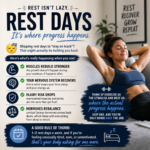
You’re skipping recovery. Muscle growth doesn’t happen during your workout — it happens afterward, while you sleep and refuel. Without adequate rest, you’re breaking down tissue without giving it the chance to rebuild stronger.
You’re relying on cardio alone. Cardio burns calories in the moment, but strength training builds metabolically active muscle that keeps working for you long after you’ve left the gym.
So what actually works?
- Progressive overload — gradually increase weight, reps, or intensity every few weeks
- Prioritize sleep — aim for 7–9 hours to support recovery and results
- Mix it up — combine strength training with varied movement patterns
- Track more than the scale — pay attention to energy, strength gains, and mood
Your routine isn’t failing because you’re not trying hard enough. It’s failing because it hasn’t evolved with you. Small, intentional changes — not more hours at the gym — are usually what unlock real results.