
You know that feeling. The 3 p.m. slump that hits like a truck. The brain fog that makes you reread the same email three times. The cravings that show up right when you’re trying to make a healthy choice. The bloating after meals that seem “normal” but somehow never feel right.
We tend to treat these as background noise — just part of being a busy, tired adult. But what if they’re not noise at all? What if they’re signals?
Your body is remarkably good at communicating what it needs. The problem is, most of us were never taught how to listen. We reach for coffee, sugar, or an early bedtime instead of asking a simpler question: what am I not eating enough of?
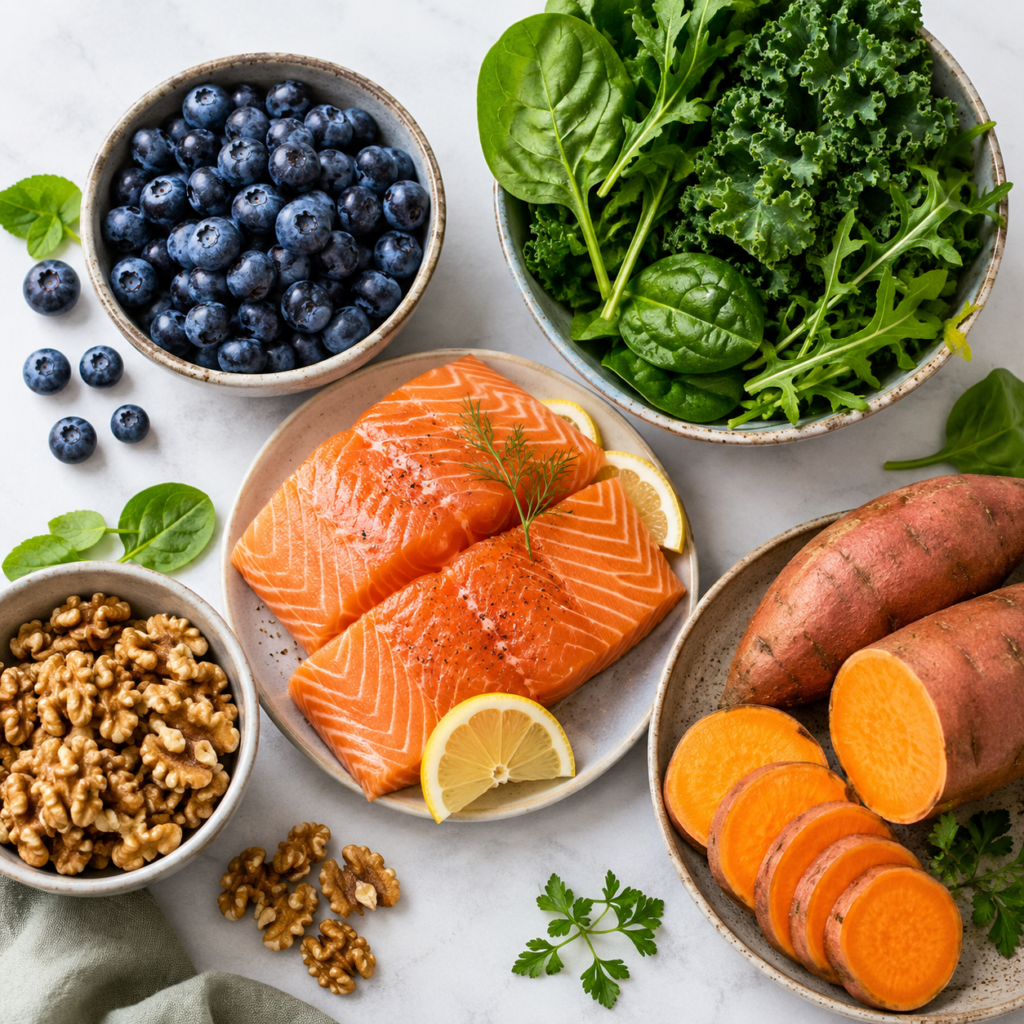
Here are five foods that show up again and again in that answer — foods your body is quietly (or not so quietly) asking you to eat more of.
1. Blueberries — The Brain’s Favorite Snack
Blueberries are small, but don’t let the size fool you. They’re loaded with antioxidants called anthocyanins, which have been studied for their role in supporting brain health, reducing inflammation, and even slowing age-related cognitive decline.
If you’ve been feeling foggy or forgetful, it’s worth asking: when’s the last time you had a handful of berries? A daily serving — fresh or frozen, both count — is one of the simplest upgrades you can make to your morning routine. Toss them in oatmeal, blend them into a smoothie, or just eat them by the handful.
2. Leafy Greens — The Unsung Heroes of Digestion
Spinach, kale, arugula, Swiss chard — leafy greens rarely get the spotlight, but they do a lot of quiet, essential work. They’re rich in fiber, which supports gut health and regularity, and packed with micronutrients like folate, vitamin K, and magnesium that most people fall short on.
If your digestion feels sluggish or your energy dips without an obvious cause, greens are often the missing piece. The good news? You don’t need a salad every day. A handful of spinach in a smoothie or scrambled eggs counts too.
3. Fatty Fish — Nature’s Anti-Inflammatory
Salmon, sardines, and mackerel are some of the best sources of omega-3 fatty acids — the “healthy fats” that support brain function, joint health, and heart health all at once.
Most people simply don’t eat enough fish. If you’re dealing with joint stiffness, mood swings, or you just feel like your brain isn’t as sharp as it used to be, omega-3s are worth a closer look. Aim for two servings a week if you can. Canned sardines or salmon make this easier (and cheaper) than you’d think.
4. Walnuts — A Small Handful, A Big Difference
Walnuts stand out among nuts for their omega-3 content and their impact on heart health. Studies have linked regular walnut consumption to improved cholesterol levels and reduced inflammation.
They’re also a great snack for appetite control — a small handful can keep you satisfied for hours, which makes them a smart swap for the mid-afternoon vending machine run.
5. Sweet Potatoes — Slow-Burning Energy
Sweet potatoes are a fiber and vitamin A powerhouse, and unlike refined carbs, they release energy slowly. That means fewer blood sugar spikes and crashes — which might explain why you feel wired one hour and depleted the next.
If your energy feels like a rollercoaster throughout the day, swapping refined carbs for sweet potatoes (or other slow-digesting complex carbs) can help smooth things out.
The Takeaway
None of these foods require a diet overhaul, a meal plan, or giving anything up. That’s the point. Your body isn’t asking for perfection — it’s asking for a few consistent additions.
Start small. Pick one food from this list and add it to your plate this week. Notice how you feel. Then add another.
Healthy eating doesn’t have to be complicated. Sometimes it’s just about listening.